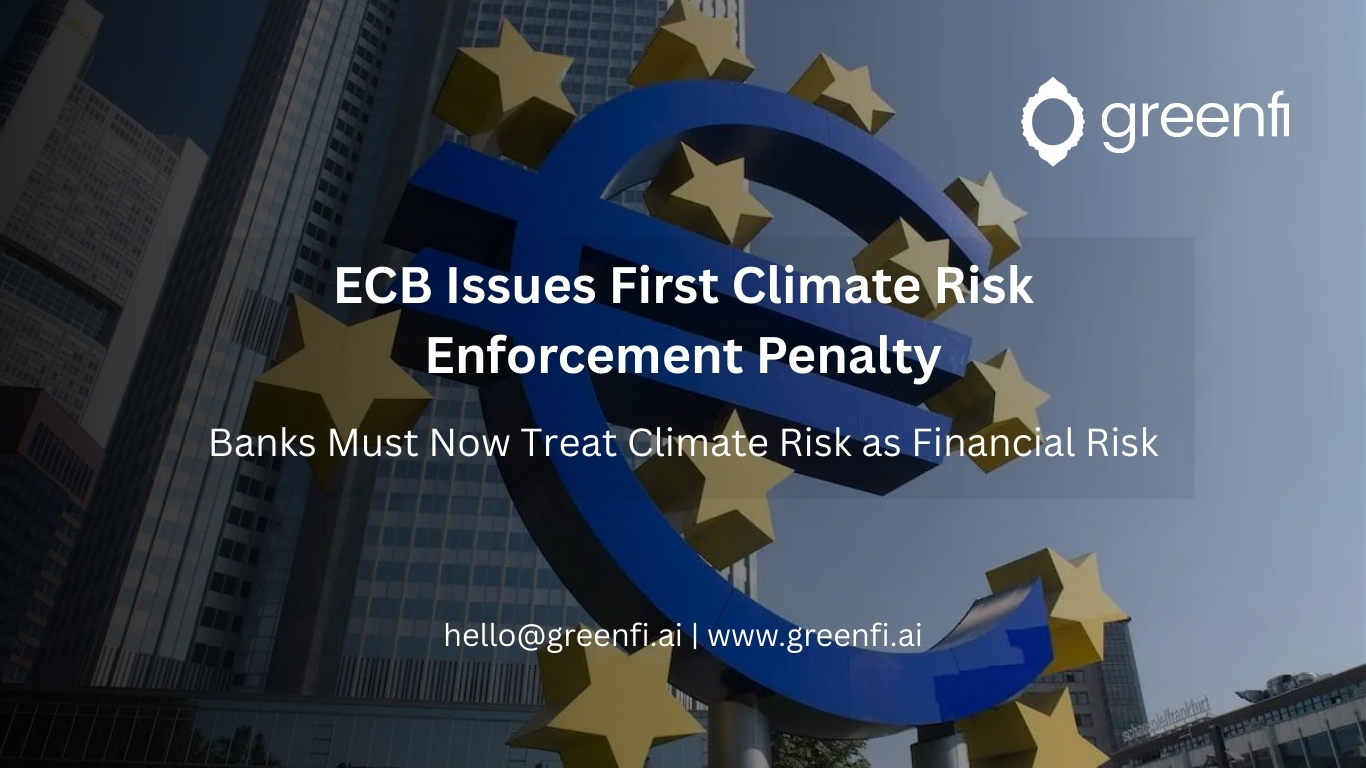
On 10 November 2025, the European Central Bank (ECB) announced something unprecedented:
It imposed periodic penalty payments totalling €187,650 on ABANCA Corporación Bancaria for failing to complete a required materiality assessment of climate and environmental (C&E) risks within the deadline set by the supervisor.
While the amount may seem small for a major bank, the signal it sends is enormous.
This is, from all available evidence, the first enforcement action directly linked to climate & environmental risk management in the EU banking system.
And it changes the regulatory landscape.
What Exactly Happened?
- In December 2023, the ECB issued a decision requiring ABANCA to strengthen its identification of climate & environmental risks and conduct a materiality assessment by March 31, 2024.
- The bank failed to meet this supervisory requirement.
- The ECB declared the bank non-compliant for 65 days.
- As a result, the ECB imposed periodic penalty payments amounting to €187,650.
The ECB made it clear:
Supervisory expectations on climate-risk are no longer “guidelines” – they are legally binding obligations.
Why This Matters (Far Beyond One Bank)
This enforcement marks a turning point in European financial regulation.
- Climate risk = financial risk (officially).
The ECB has now demonstrated that climate & environmental risks directly affect prudential oversight. This moves climate issues from sustainability teams into the core of risk management.
- We have entered the age of enforcement.
For years, regulators published guidance, thematic reviews, and questionnaires. Now they’re using penalties. And penalties escalate.
- This is a warning to all banks.
Materiality assessments, exposure mapping, climate-scenario analysis, and portfolio-level quantification are not optional.
Supervisors expect real systems, real data, and real governance.
- This is not paperwork. It’s resilience.
Climate and environmental risks directly affect credit quality, collateral values, capital planning, and long-term solvency.
Regulators are enforcing these rules because they view climate risk as a threat to financial stability.
This enforcement is likely the first shot of many.
How GreenFi Helps Banks Stay Ahead of Enforcement
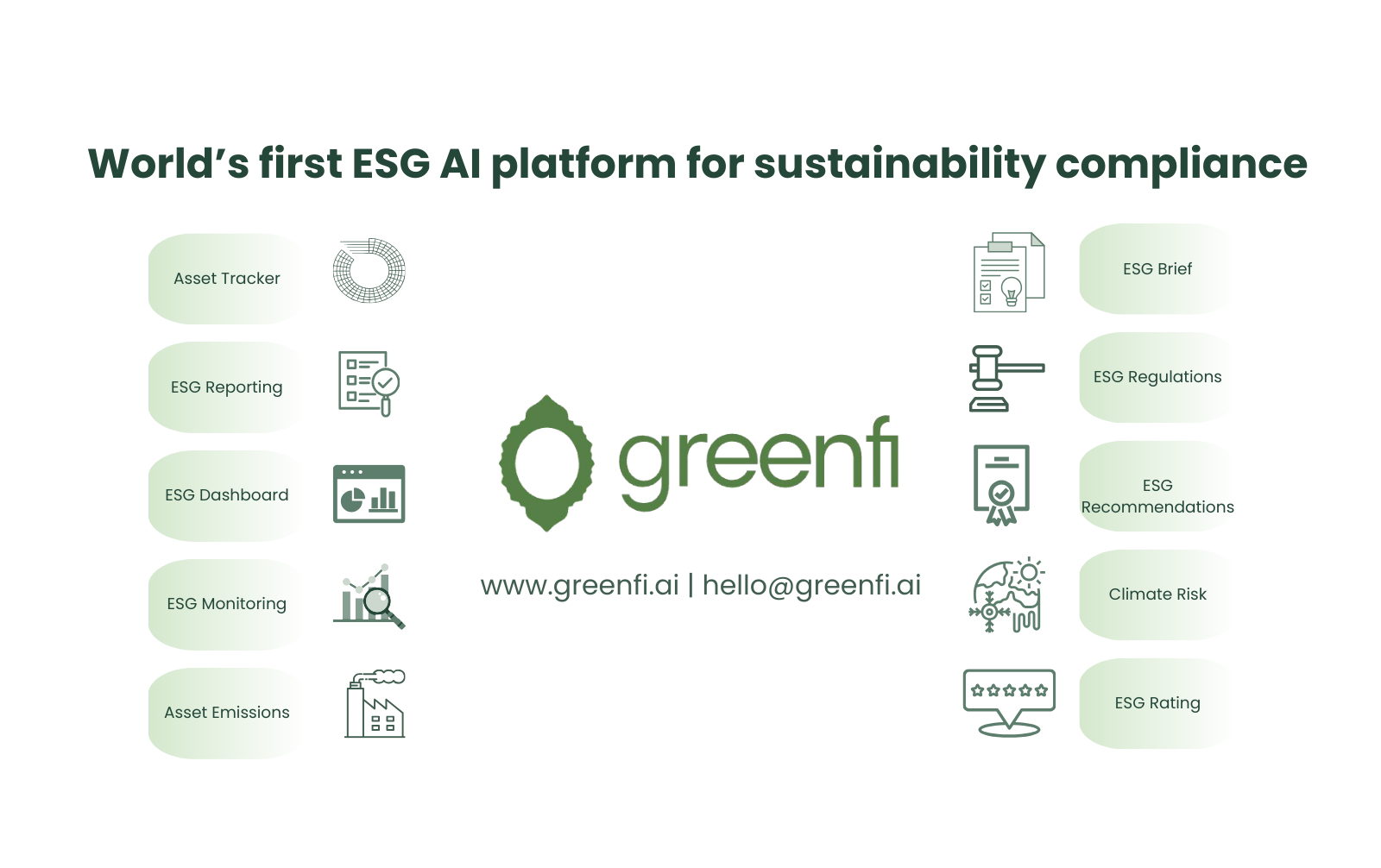
With this enforcement action, banks across the EU must reassess their climate-risk readiness. GreenFi provides end-to-end solutions designed precisely for this moment.
- Climate & Environmental (C&E) Materiality Assessments
Complete, regulator-aligned materiality assessments – covering climate, environmental, sectoral, geographic, and portfolio-level risk drivers.
- End-to-End Climate Risk Management Frameworks
We build frameworks aligned with all ECB expectations:
- 2020 Guide on C&E risks
- 2022 Thematic Review
- 2024/2025 supervisory updates
- Latest enforcement practices
From governance to strategy to risk appetite – fully supervisor-ready.
- Automated Portfolio-Level Climate Risk Analytics
Using GreenFi’s platform, banks can quantify:
- physical climate risks
- transition risks
- counterparty and sector exposure
- forward-looking risk under multiple climate scenarios
Supporting ICAAP, IFRS 9 overlays, stress tests, etc.
- Scenario Analysis & Stress Testing
We run NGFS-aligned scenarios and provide loss projections most banks currently lack.
- Policies, Governance, and Supervisory Documentation
GreenFi prepares:
- climate-risk policies
- exposure identification methodologies
- materiality assessment reports
- board & management committee packs
- annual disclosures
Everything supervisors expect – ready for inspection.
- Complete ESG & Sustainability Reporting
CSRD/ESRS, ISSB, TCFD, EU Taxonomy – fully integrated, automated and audit-ready.
- Rapid Compliance Gap Assessments
A fast 2-4 week engagement to pinpoint exactly where a bank stands relative to ECB expectations and how to close the gaps fast.
Final Thought: This Is Just the Beginning
The ECB’s penalty is symbolic, but its message is unmistakable:
Climate & environmental risk management is no longer optional, and it is no longer theoretical. It is enforceable.
Banks that take climate risk seriously today will be more resilient tomorrow – and avoid supervisory pressure.
If your bank or financial institution needs to strengthen its climate-risk approach, GreenFi is ready to support you end-to-end.
Let’s build resilience before the next enforcement wave hits.
Get in touch with GreenFi today – hello@greenfi.ai