Sustainability used to be optional in the Middle East. Not anymore.
Across the region, governments are replacing voluntary pledges with binding laws, real deadlines, and real penalties. For companies operating in the UAE, Oman, and beyond, the question is no longer whether to comply with ESG regulations, but how fast you can get ready.
United Arab Emirates: Binding Laws, Real Deadlines, Real Penalties
The UAE has made a clear shift, ESG compliance is now a legal obligation, not a choice.
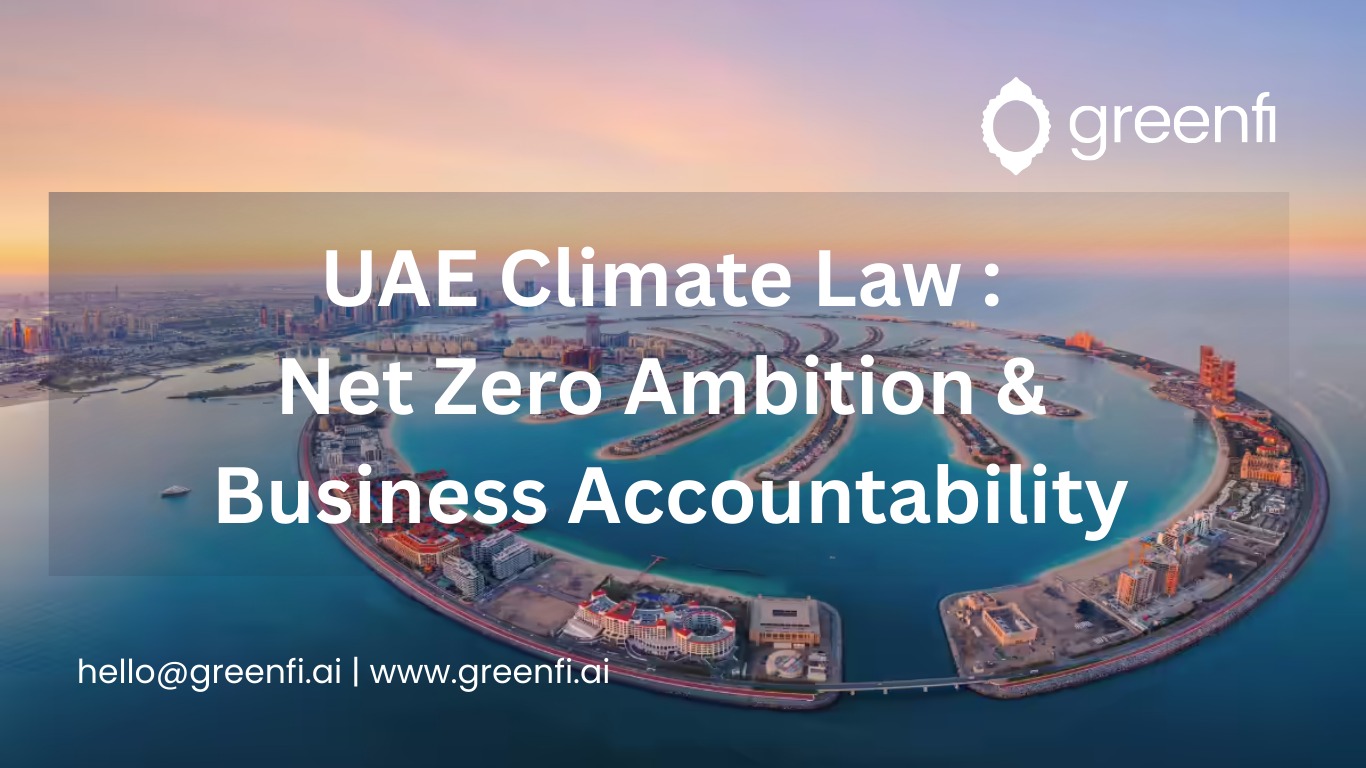
On May 30, 2025, the UAE brought into force Federal Decree-Law No. 11 of 2024 , making it the first country in the Middle East and North Africa region to establish a binding legal framework for climate action. The law applies to every public and private entity in the UAE, including those operating in free zones.
What does it require?
- Measure, report, and verify Scope 1 and Scope 2 greenhouse gas (GHG) emissions through a national electronic platform
- Implement active emission reduction strategies
- Large emitters (over 0.5 million metric tons CO₂e/year) must register with the National Register for Carbon Credits (NRCC)
Non-compliance carries fines ranging from AED 50,000 to AED 2,000,000, with penalties potentially doubling to AED 4,000,000 for repeat or serious breaches. Beyond financial penalties, businesses risk permit suspension, activity restrictions, and exclusion from government procurement. (PwC Middle East)
Beyond the Climate Law, listed companies on the Dubai Financial Market (DFM) and Abu Dhabi Securities Exchange (ADX) must submit annual sustainability reporting within 90 days of financial year-end, aligned with GRI and TCFD frameworks. The Abu Dhabi Global Market (ADGM) requires large entities to publish ESG reporting disclosures under a “comply or explain” approach. And the DFSA within the DIFC is actively integrating ESG risk management into corporate governance, with a specific focus on reducing greenwashing risks.
These regulations sit within a broader national vision including the National Green Agenda 2015 – 2030, the National Climate Change Plan 2017–2050, and the UAE Sustainable Finance Framework (2021) all pointing in the same direction: a structured, low-carbon economy built on sustainable financing.
For a detailed breakdown of what the UAE’s May 2026 reporting deadline means for businesses, read PwC Middle East’s full analysis on UAE Climate Law compliance obligations.
Oman: Building the Framework for Net-Zero
Oman is moving steadily and deliberately toward a sustainable economy, with meaningful regulatory progress in 2025.
The country’s headline commitment is net-zero GHG emissions by 2050, with renewable energy and energy efficiency at the core of its transition strategy.
On the regulatory side, the Ministry of Finance has developed a Sustainable Finance Framework enabling the issuance of Green, Social, and Sustainability bonds, loans, and sukuk providing sustainable financing pathways for projects with clear environmental or social outcomes.
Most significantly, as of 2025, all listed public joint stock companies (SAOGs) are required to publish their ESG practices with board approval mandatory, and disclosures expected to be accurate, realistic, and clear. Standalone companies have 30 days from financial year-end; companies with subsidiaries have 45 days.
Oman’s emission profile makes this urgency clear: the oil and gas sector contributes around 25% of total GHG emissions, while industry accounts for 32%, with power, transport, and buildings making up the rest. Diversifying away from these sources is a core goal of Oman Vision 2040, which aims to reduce oil’s share of GDP to 16% by 2030.
The Broader Regional Picture
The UAE and Oman aren’t outliers, they’re part of a regional wave.
- Saudi Arabia has committed to net-zero by 2060, with large-scale renewable energy investments underway
- Bahrain introduced a National Energy Strategy in 2023 targeting net-zero by 2060, with a focus on sustainable urban development
- Qatar issued ESG reporting guidelines in 2022, with mandatory sustainability reporting now expected from 2025
What This Means for Your Business
Keeping up with evolving ESG compliance requirements across multiple jurisdictions, frameworks, and deadlines is genuinely complex. Most companies face the same gaps: fragmented data, manual reporting processes, and no clear visibility into where they stand on their ESG rating or supply chain exposure.
ESG risk management has also expanded beyond direct operations. Regulators increasingly expect companies to assess their sustainable supply chain tracking emissions and social risks across vendors, suppliers, and partners. This makes end-to-end sustainability visibility not just a best practice, but a regulatory expectation.
This is exactly what GreenFi is built for.
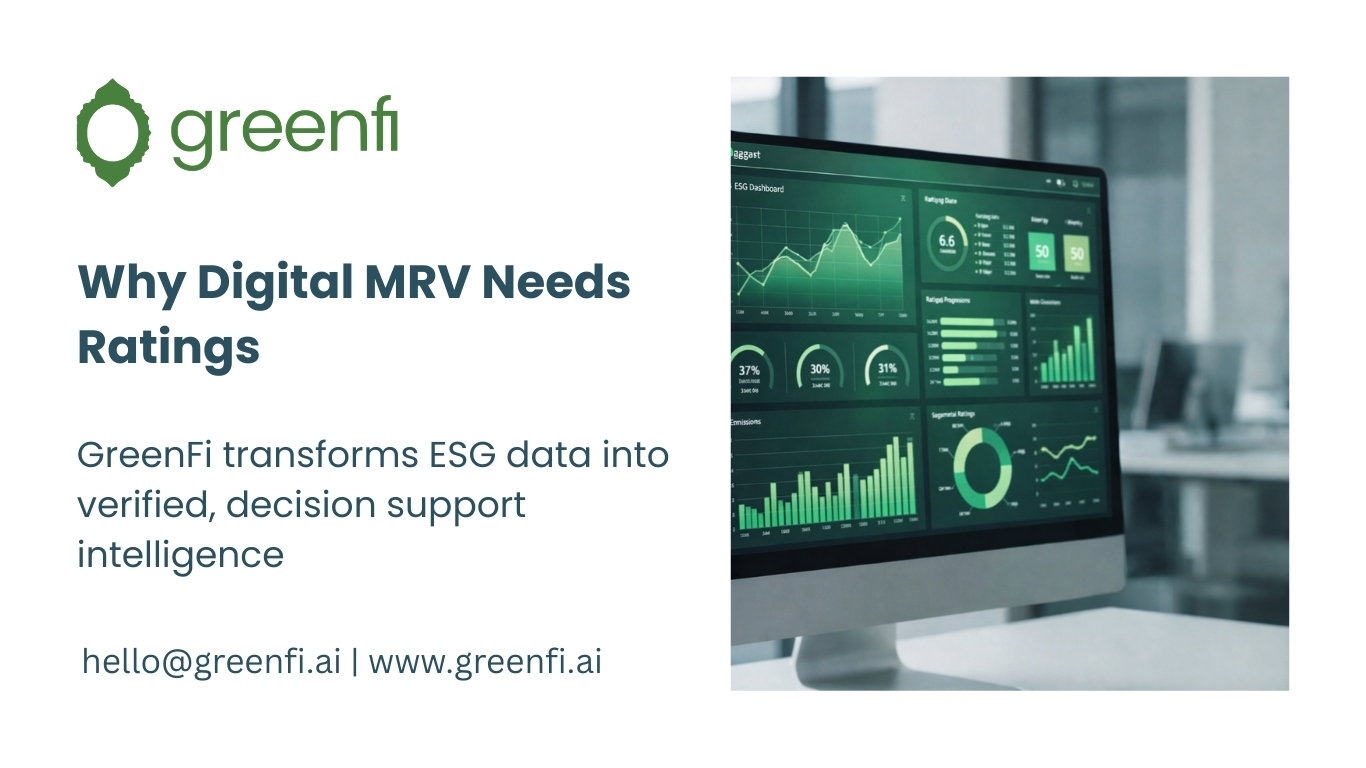
GreenFi is an AI-powered ESG risk and compliance platform that helps financial institutions and enterprises manage sustainability data, reporting, and decision-making more efficiently. It replaces fragmented, manual processes with a unified system for ESG analysis and compliance. Key capabilities include:
- ESG data aggregation and analysis across multiple sources
- Automated sustainability reporting aligned with global frameworks
- AI-driven identification of ESG risks and opportunities
- Workflow automation for faster, audit-ready compliance
Whether you’re preparing your first board-approved ESG disclosure in Oman, navigating the UAE’s May 2026 reporting deadline, or building a sustainable financing strategy GreenFi gives you the infrastructure to do it right.
Want to understand how sustainable finance and ESG investing are evolving globally?
Read: What Is Sustainable Finance? ESG Investing, Green Bonds, and Ethical Banking
Or explore how AI is transforming ESG risk management for banks: ESG AI Harness the Power of ESG Data
Schedule a call with us today: hello@greenfi.ai
Learn more: www.greenfi.ai