The Problem India Could No Longer Ignore
India is the world’s third-largest producer of greenhouse gas emissions. For years, its industrial growth and climate goals have pulled in opposite directions. Heavy industries like steel, cement, aluminium, and fertilisers kept growing with little real pressure to reduce emissions. Commitments existed on paper. Action didn’t follow. And as climate change became more urgent around the world, India’s approach to managing industrial emissions remained scattered, hard to verify, and mostly done by hand.
The consequences are already showing up. Indian exporters now face the EU’s Carbon Border Adjustment Mechanism, which came into full effect in 2026 essentially a carbon tax on goods from countries without their own carbon pricing system. Without such a system at home, Indian businesses risked losing access to European markets. At the same time, companies investing in clean technology and sustainable development had no way to get credit for it.
What Has Changed: India’s Carbon Market Goes Live
At Prakriti 2026, the government didn’t release another policy document; it launched infrastructure. The Indian Carbon Market Portal, inaugurated by Union Power Minister Manohar Lal Khattar, is the digital backbone of India’s Carbon Credit Trading Scheme (CCTS). It brings registration, Monitoring, Reporting and Verification (MRV), credit issuance, and trading together into one single platform. Formal trading in Carbon Credit Certificates (CCCs) is expected to begin within four months. For a full breakdown of what the portal means in practice, read Carbon Credits’ coverage of the launch.
According to the official Government of India press release, 490 companies across seven energy-intensive sectors have been given binding Greenhouse Gas Emission Intensity (GEI) targets. Nine approved methods for earning carbon credits have been announced, with over 40 entities already registered in sectors including biogas, hydrogen, and forestry. The framework is also designed to support India’s broader sustainable development goals treating carbon markets as an economic opportunity, not just a regulatory burden.
The Bigger Shift: Three Things India Is Signalling
- India is moving from just making policies to actually running a carbon market, with trading expected to start within four months.
- The system will open up voluntary carbon markets, allowing MSMEs, farmers, and climate-tech projects to participate using approved methods.
- It also aligns with global rules (Article 6), helping India connect with international carbon markets in the future building the base for a new climate-focused economy.
The Real-World Impact: Who Gets Hit and Who Gains
The compliance mechanism is simple but significant. Companies that perform better than their emission intensity targets earn tradable CCCs a direct financial reward for cutting emissions. Companies that fall short must buy credits or face penalties. Carbon is now a real operating cost, not a line in a sustainability report. This is ESG compliance moving from something companies talk about to something that shows up on the balance sheet.
The impact goes beyond large industries. India has also opened a voluntary offset market, allowing MSMEs, farmers, renewable energy developers, and climate-tech projects to generate and trade credits. Sustainable agriculture is an explicit part of this. Farmers who adopt low-emission practices can now earn carbon credits for it. As SolarQuarter reported from Prakriti 2026, sectors spanning green hydrogen, afforestation, biogas, and waste management are already in scope. For rural India, climate change adaptation is no longer just about getting through it is becoming a source of income.
Where Most Companies Are Falling Short
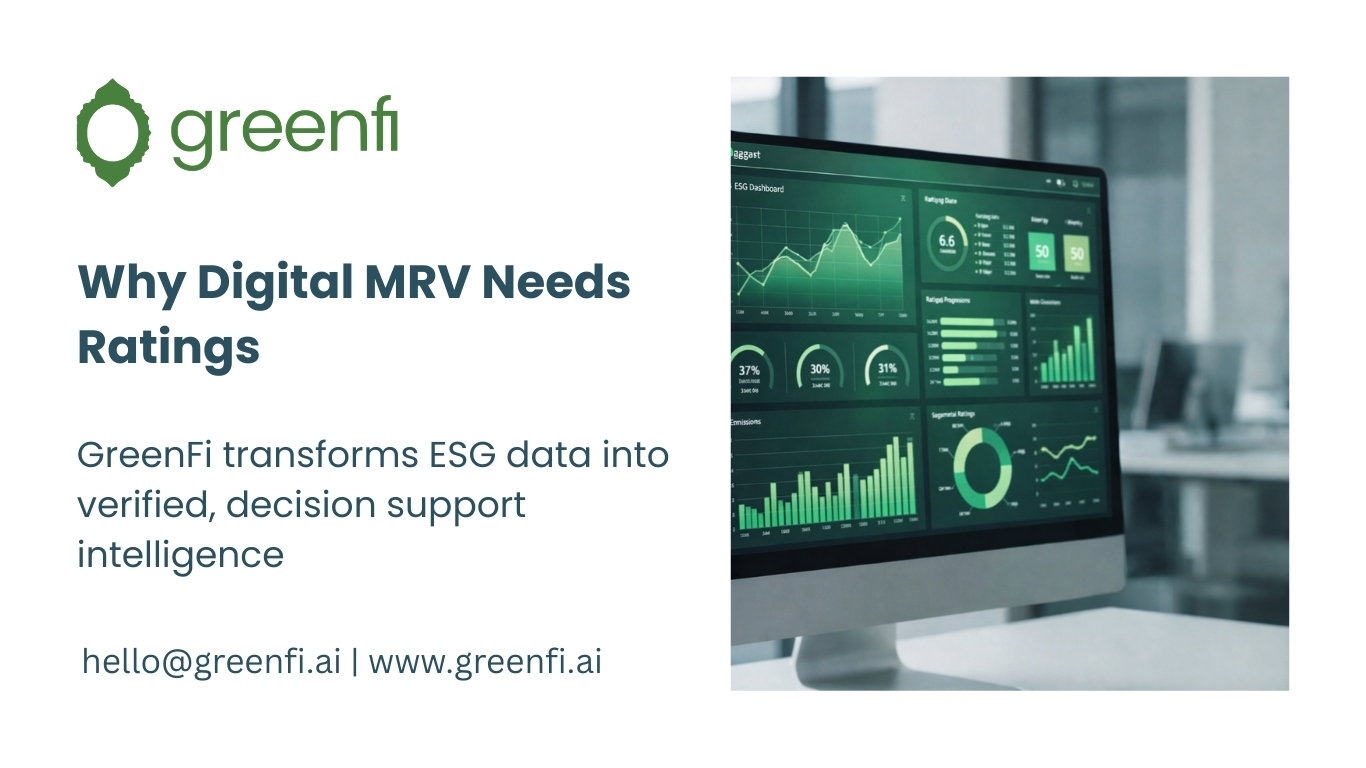
Here is the uncomfortable truth. Carbon markets only work when the data behind them is credible, auditable, and up to date. And right now, most Indian companies are not ready. Emissions are tracked on spreadsheets. MRV is done manually. ESG compliance reporting happens once a year, not continuously. There is no reliable, single source of carbon data that a regulator or auditor would trust.
When trading begins, companies without the right systems will face slower credit issuance, higher compliance costs, and a weaker position in the market. The first compliance cycle will make the gap between prepared and unprepared companies very visible and fixing it after the fact will be costly.
The Window Is Short
The companies that will do well in India’s carbon market are not necessarily the ones with the lowest emissions today. They are the ones that build the right systems in the next few months: automated MRV, continuous ESG compliance monitoring, audit-ready data, and a clear view of carbon as an asset, not just a cost. With voluntary participation open across sectors from renewable energy and green hydrogen to afforestation and waste management, India’s carbon market is set to expand rapidly. The next four months will be critical.
As trading begins, companies will need to move fast from understanding the system to actively participating in it. India’s carbon market is no longer a future concept. It is happening now. The question is no longer whether companies will participate, but how prepared they are when it starts.
This is exactly the kind of transition GreenFi was built for. We see this shift for what it is: a move from reporting emissions to managing carbon as an asset class. If you are trying to get your emissions data in order, understand your CCTS obligations, or figure out whether your organisation is eligible for voluntary credits, our platform handles the infrastructure so your team can focus on strategy. You can start with our Guide to Tracking ESG Regulations to see where India’s carbon market sits within the broader compliance landscape.
Schedule a call with us today: hello@greenfi.ai
Learn more: www.greenfi.ai