The Philippines has taken a significant step toward aligning with global sustainability reporting standards. In December 2025, the Philippine Securities and Exchange Commission (SEC) formally adopted mandatory sustainability and climate disclosure requirements, marking a decisive shift from voluntary to regulated ESG reporting.
This move places the Philippines alongside leading ASEAN markets such as Singapore and Malaysia and reflects a broader regional transition toward ISSB-aligned sustainability reporting frameworks.
Executive Summary
Through SEC Memorandum Circular No. 16, Series of 2025, issued on 22 December 2025, the SEC adopted the Philippine Financial Reporting Standards (PFRS) on Sustainability Disclosures, fully aligned with the International Sustainability Standards Board (ISSB) standards:
The regulation introduces phased mandatory sustainability reporting beginning FY 2026, with the first reports due in 2027.
Who Is Covered
- All publicly listed companies
- Large non-listed entities with annual revenues exceeding PHP 15 billion (≈ USD 268 million)
Mandatory limited assurance on Scope 1 and Scope 2 greenhouse gas (GHG) emissions will apply starting two years after adoption, depending on the reporting tier.
Regulatory Framework and Standard-Setting Process
SEC Memorandum Circular No. 16, Series of 2025 repeals the previous voluntary sustainability reporting framework (SEC MC No. 4, Series of 2019) and establishes enforceable sustainability disclosure obligations.
The adoption followed the Philippines’ formal standard-setting process:
- The Financial and Sustainability Reporting Standards Council (FSRSC) approved the local adoption of IFRS S1 and S2
- The Professional Regulatory Board of Accountancy (PRBOA) endorsed the standards on 17 October 2024 (Resolution No. 61)
Phased Implementation Timeline
To support a smooth transition, the SEC introduced a three-tier implementation approach based on market capitalization and revenue thresholds.
Tier 1 – Large-Cap Listed Companies
- Market capitalization above PHP 50 billion
- First reporting period: FY 2026
- Submission year: 2027
- Limited assurance on Scope 1 & 2 starting FY 2028 (reported in 2029)
Tier 2 – Mid-Cap Listed Companies
- Market capitalization between PHP 3 billion and PHP 50 billion
- First reporting period: FY 2027
- Submission year: 2028
- Limited assurance on Scope 1 & 2 starting FY 2029 (reported in 2030)
Tier 3 – Small-Cap Listed & Large Non-Listed Entities
- Listed companies with market cap ≤ PHP 3 billion
- PLCs listed solely on PDEx
- Large non-listed entities with revenues > PHP 15 billion
- First reporting period: FY 2028
- Submission year: 2029
- Limited assurance on Scope 1 & 2 starting FY 2030 (reported in 2031)
Submission and Governance Requirements
Publicly Listed Companies
- Sustainability reports must be reviewed and approved by the Board of Directors
- Reports must be attached to the Annual Report
- Filed with the SEC in accordance with sustainability reporting guidelines
Large Non-Listed Entities
- Entities covered under Section 17.2 of the Securities Regulation Code must submit sustainability reports as an Annual Report attachment
- Other entities must submit sustainability reports together with audited financial statements
- Board approval is mandatory prior to issuance
Reporting Timelines During Transition
Sustainability reports may be filed:
- Along with Q2 or half-year interim financial statements, or
- Within nine months from the end of the reporting period if no interim statements are issued
Overview of the PFRS Sustainability Standards
PFRS S1 – General Sustainability Disclosures
PFRS S1 establishes a baseline framework for sustainability reporting across four pillars:
- Governance
- Strategy
- Risk Management
- Metrics and Targets
PFRS S2 – Climate-related Disclosures
PFRS S2 focuses on climate-related risks and opportunities, including:
- Climate governance and oversight
- Climate strategy and business resilience
- Climate risk and opportunity management
- GHG emissions reporting (Scope 1, 2, and 3)
Industry and Market Impact
Immediate Impact (2026–2027)
- Initial adoption by Tier 1 large-cap listed companies
- Concentrated in banking, telecom, utilities, real estate, and diversified conglomerates
- These companies represent a significant share of Philippine Stock Exchange market capitalization
Medium-Term Impact (2027–2028)
- Expansion to mid-cap companies across manufacturing, services, retail, and infrastructure
- Increased diversity in sustainability disclosures and operating models
Full Implementation (2028–2029)
- Coverage extends to small-cap listed companies and large non-listed entities
- Sustainability reporting becomes a mainstream regulatory requirement across the economy
Sectoral Implications
Energy & Utilities
- High Scope 1 emissions from fossil fuel generation
- Significant transition risks from decarbonization policies
- Strong demand for credible transition strategies and renewable integration
Manufacturing
- Complex Scope 3 emissions across supply chains
- Increased pressure for supplier transparency and emissions data
- Opportunities in efficiency, material optimization, and circular economy practices
Financial Services
- Exposure to financed emissions through lending and investments
- Integration of climate risk into credit and portfolio decision-making
- Heightened expectations for portfolio-level climate disclosures
Real Estate
- Operational emissions and energy efficiency challenges
- High exposure to physical climate risks such as flooding and typhoons
- Growing demand for green certifications and climate-resilient assets
How GreenFi Enables PFRS-Aligned Sustainability Reporting
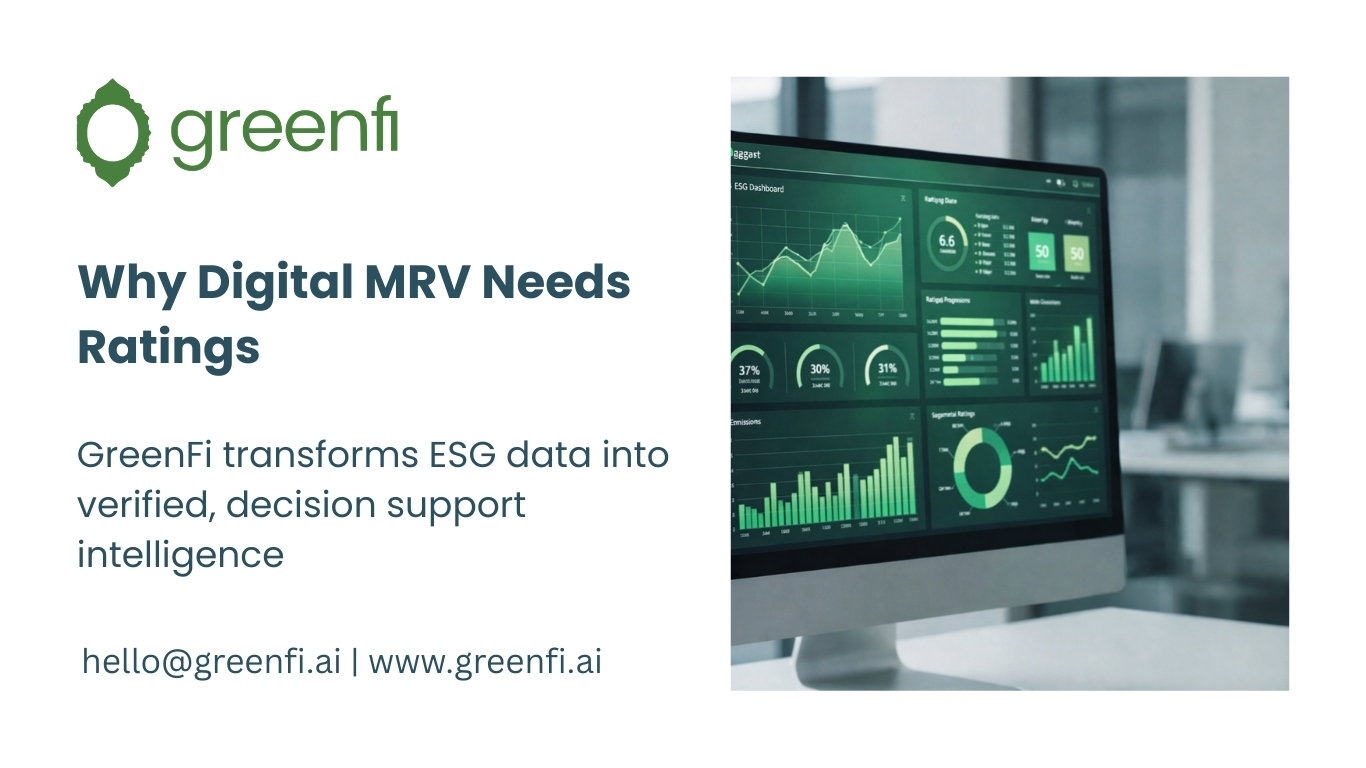
GreenFi helps Philippine companies seamlessly comply with the SEC’s mandatory sustainability reporting requirements under PFRS S1 and PFRS S2. The platform supports organizations across all tiers from large listed companies to large non-listed entities by mapping regulatory requirements, assessing readiness, and creating clear, tier-aligned adoption roadmaps. GreenFi centralizes ESG and operational data, enables Scope 1, 2, and 3 emissions accounting aligned with ISSB and global standards, and provides automated audit trails to support upcoming limited assurance requirements. With board-ready dashboards and investor-grade disclosures covering governance, strategy, risk management, and metrics, GreenFi helps organizations move beyond compliance to build credible, future-ready sustainability reporting aligned with global best practices.
To learn more – hello@greenfi.ai