For years, climate finance has largely focused on mitigation – reducing greenhouse gas emissions and accelerating the transition to a low-carbon economy. But another challenge is becoming impossible to ignore: how do businesses prepare for the physical impacts of climate change that are already happening?
Extreme heat, floods, droughts, water scarcity, wildfires and stronger storms are disrupting supply chains, damaging infrastructure, increasing insurance costs and creating new financial risks across industries’
As these risks continue to grow, climate adaptation is no longer viewed as a future sustainability objective. It is becoming an essential business and investment strategy. Financial institutions are increasingly playing a central role by helping businesses build resilience while unlocking new financing opportunities.
Why Adaptation Finance Matters
Climate adaptation finance refers to investments that help businesses, infrastructure, communities, and ecosystems prepare for and respond to physical climate risks.
Unlike mitigation, which focuses on reducing emissions, adaptation focuses on reducing vulnerability.
This can include investments in:
- Climate-resilient infrastructure
- Water security projects
- Climate-smart agriculture
- Flood protection
- Disaster risk financing
- Resilient energy systems
- Nature-based solutions
- Climate risk analytics and early warning systems
For financial institutions, adaptation finance represents more than a sustainability initiative. It is an opportunity to improve portfolio resilience, reduce long-term credit risk, support customers, and finance new markets.
Adaptation Is Already Being Financed
One of the biggest misconceptions is that adaptation finance requires entirely new financial products.
In reality, financial institutions are successfully financing resilience through familiar instruments including:
- Commercial lending
- Green and blue bonds
- Trade finance
- Equity investments
- Insurance
- Catastrophe bonds
- Blended finance
- Government-supported financing structures
Across different regions, banks, insurers and investment firms are integrating climate resilience into existing financial products rather than creating entirely new markets.
This demonstrates that adaptation finance can scale within today’s financial system.
Four Lessons Emerging Across the Financial Sector
- Climate Risk Must Become a Financial Metric
Organizations are increasingly translating physical climate risks into measurable financial impacts.
Instead of simply identifying flood or drought exposure, leading institutions evaluate:
- Potential business interruption
- Asset damage
- Reduced collateral value
- Insurance costs
- Future cash flow impacts
- Long-term portfolio resilience
This allows climate resilience investments to be evaluated using traditional financial decision-making frameworks.
- Adaptation Creates New Financing Opportunities
Climate resilience is creating demand across multiple industries.
Examples include:
- Water infrastructure
- Agriculture
- Renewable energy
- Real estate
- Logistics
- Transportation
- Insurance
- Utilities
Rather than waiting for projects to emerge, many financial institutions are actively engaging customers to identify resilience needs and develop financeable opportunities.
- Collaboration Is Essential
Many adaptation projects require collaboration between banks, insurers, governments, development finance institutions, investors, and technical experts.
Blended finance structures, guarantees, concessional capital, and public-private partnerships are helping reduce project risks while attracting private investment.
- Adaptation Is Becoming a Competitive Advantage
Financial institutions that build expertise in climate risk assessment, project structuring, and resilience financing are increasingly differentiating themselves in the market.
Beyond regulatory compliance, adaptation finance strengthens client relationships, improves portfolio quality, and positions institutions for long-term growth.
The Growing Role of Technology
Scaling adaptation finance depends on better data, stronger analytics, and integrated reporting.
Financial institutions need the ability to:
- Assess physical climate risks
- Measure emissions and climate exposure
- Identify vulnerable assets
- Evaluate investment opportunities
- Monitor resilience performance
- Generate audit-ready sustainability reports
Without reliable data and standardized workflows, adaptation finance becomes difficult to scale across portfolios.
How GreenFi Helps
As climate risks become increasingly material to business performance, financial institutions need technology that transforms sustainability data into actionable business intelligence.
GreenFi’s AI-powered ESG platform helps financial institutions and enterprises build climate resilience by enabling them to:
- Assess physical climate risks across portfolios, assets, operations, and supply chains to understand potential business impacts.
- Identify vulnerable assets by combining climate risk analytics, geospatial intelligence, and operational data to prioritize resilience investments.
- Measure greenhouse gas emissions and climate exposure using standardized data collection and automated carbon accounting.
- Evaluate climate-related investment opportunities by translating sustainability insights into financeable projects and long-term business value.
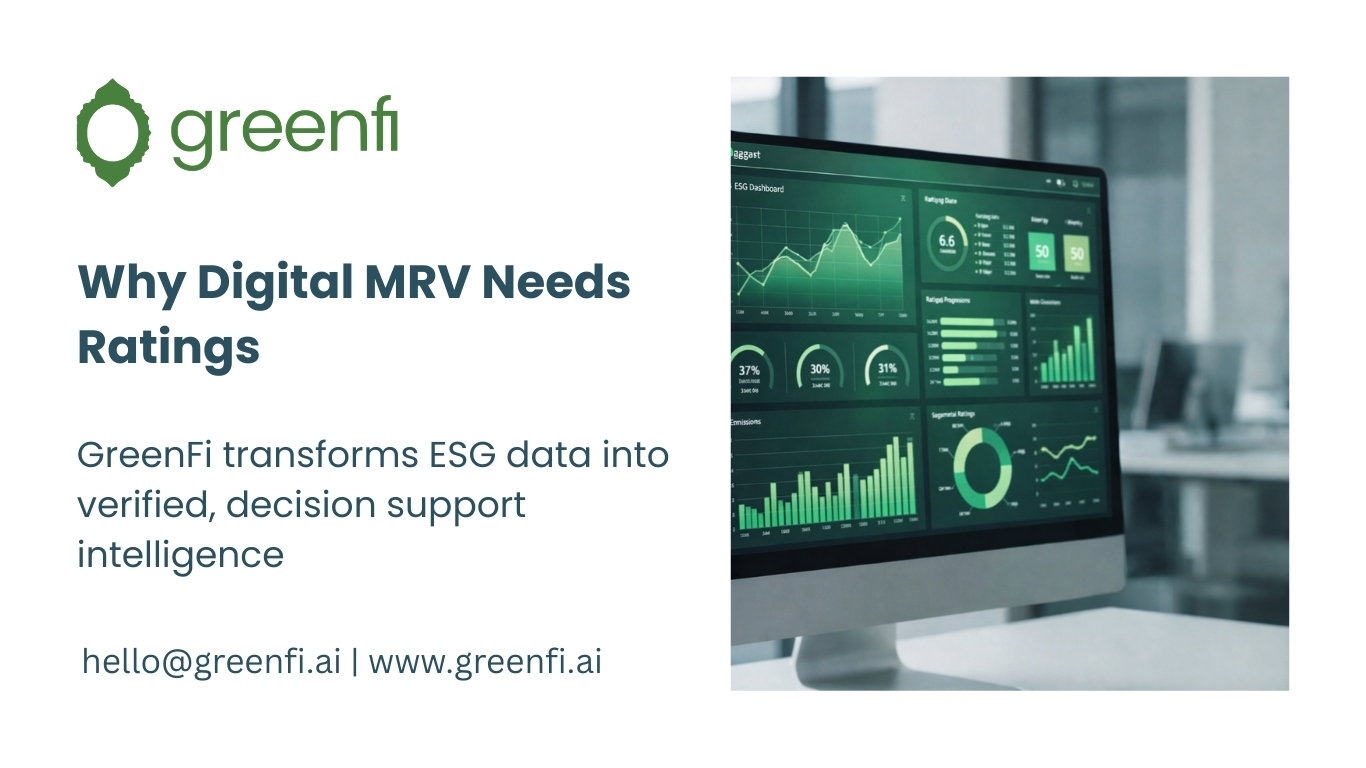
- Monitor resilience performance through real-time dashboards, ESG KPIs, climate targets, and progress tracking.
By integrating ESG data, climate risk insights, and reporting into a unified platform, organizations can move beyond compliance and embed resilience into strategic decision-making.
Looking Ahead
Climate adaptation is rapidly becoming one of the defining themes in sustainable finance.
Financial institutions are no longer asking whether resilience should be financed – they are demonstrating how existing financial products, better risk assessment and stronger collaboration can mobilize capital toward a more climate-resilient economy.
For businesses, investors and financial institutions alike, adaptation finance represents an opportunity to protect assets, strengthen long-term performance, and build resilience in an increasingly uncertain climate.
Schedule a call with us today: hello@greenfi.ai
Learn more: www.greenfi.ai