For many manufacturers, the first CBAM audit will fail, even if their emissions numbers are technically “right”.
Not because sustainability teams misunderstood carbon accounting. But because ERP controls, supplier data integrity, and audit traceability were never designed for carbon data.
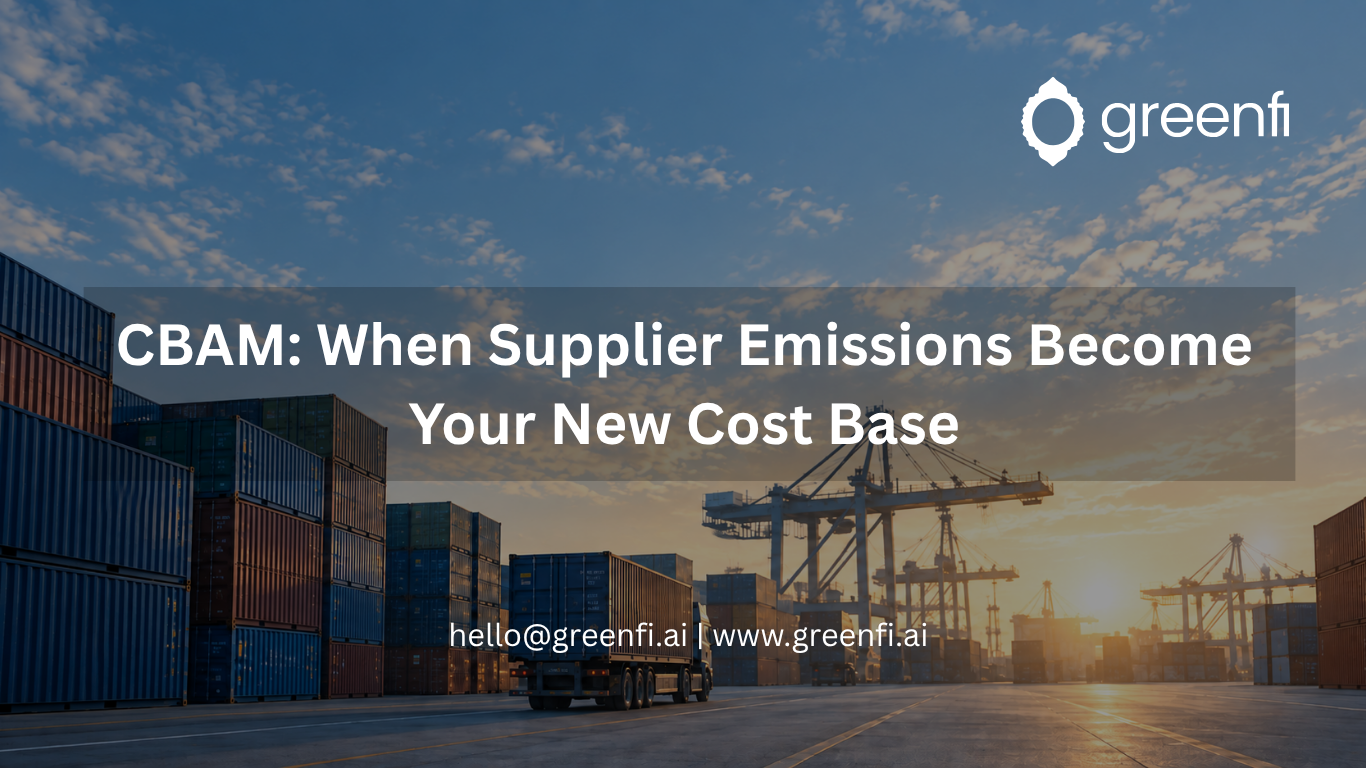
The Carbon Border Adjustment Mechanism (CBAM) is often positioned as a climate or sustainability regulation. In practice, it is something far more disruptive: CBAM forces carbon data to be treated like financial data.
And that changes everything for CIOs and CFOs.
CBAM Is Not a Sustainability Problem. It’s a Governance Problem.
CBAM now sits squarely inside the ESG framework that investors, customers, and regulators use to assess:
- operational resilience
- risk management maturity
- data governance
- and executive accountability
At its core, CBAM introduces a new cost base, embedded emissions from your global supply chain, and expects it to be:
- accurate
- auditable
- traceable
- and defensible under regulatory scrutiny
This is where many manufacturers will struggle.
The Real CBAM Challenge: Data, Not Emissions
From a CIO and CFO perspective, CBAM creates three very practical challenges:
- CBAM depends on accurate, auditable emissions data flowing from global suppliers into ERP and reporting systems.
- That data must be governed with the same discipline as revenue, cost, or inventory data.
- Any break in controls exposes the business to financial and operational risk.
Carbon data that lives in spreadsheets, emails, or disconnected sustainability tools may be directionally correct, but it is not audit-ready.
When Carbon Data Breaks, the Business Feels It
If supplier emissions data is incomplete, inconsistent, or unsecured, the consequences are not theoretical:
- regulatory exposure and penalties
- shipment delays at borders
- revenue disruption
- audit findings
- loss of customer and investor confidence
- reputational damage
In other words, carbon data quality is now an operational risk issue.
What Forward-Looking Manufacturers Are Doing Differently
The organisations getting ahead of CBAM are not debating narratives. They are strengthening controls.
They are:
- embedding carbon data into ERP and financial reporting environments
- securing supplier data ingestion, validation, and integration workflows
- aligning CBAM reporting with existing financial governance and audit disciplines
- treating emissions data as a regulated enterprise data asset, not a sustainability add-on
This mirrors what happened years ago with financial reporting, trade compliance, and data privacy. CBAM is simply the next extension.
CBAM Extends Financial-Grade Controls Into the Supply Chain
CBAM is not just about reporting emissions, it is about proving them.
For CIOs, it raises questions about system architecture, data lineage, and access controls.
For CFOs, it introduces new cost exposure, audit scope, and compliance risk tied directly to supplier data quality.
Supplier emissions data is no longer “nice to have”. It is your new cost base.
If you are a CIO or CFO working through how CBAM impacts ERP integrity, supplier data governance, or operational risk, we’re always happy to compare notes or share experience across manufacturing organisations.
To know more, you can write to the GreenFi team at hello@greenfi.ai.