Supply chains are becoming more complex, and so are the risks associated with them. From environmental compliance and human rights to operational disruptions and regulatory changes, companies need a reliable way to understand what is happening across their supplier networks.
Yet, many procurement, compliance, and sustainability teams still rely on spreadsheets, email chains, manual data collection, and repeated supplier follow-ups to manage this information.
The result? Fragmented data, delayed insights, inconsistent reporting, and limited visibility into the risks that could affect business performance.
It is time for a smarter approach.
The Challenge: Supplier Data Is Everywhere, but Insights Are Missing
Managing supplier risk is not simply about collecting information. It is about turning that information into actionable intelligence.
As supplier networks grow, businesses often face several challenges:
- Fragmented data: Supplier information is scattered across spreadsheets, documents, emails, and different systems.
- Time-consuming follow-ups: Teams spend hours chasing suppliers for missing information, updated assessments, and supporting documents.
- Limited risk visibility: Identifying emerging ESG, environmental, social, and operational risks across multiple suppliers and regions becomes increasingly difficult.
- Outdated information: Supplier risk profiles can quickly become unreliable when data is not regularly reviewed and updated.
- Increasing compliance pressure: Evolving sustainability regulations and reporting requirements demand more consistent, traceable, and reliable supplier data.
Without a connected approach, teams spend more time managing information than acting on it.
Why Traditional Supplier Risk Management Needs to Evolve
Traditional supplier assessments often operate as periodic exercises. Companies collect information, review questionnaires, prepare reports, and revisit the process when the next assessment cycle begins.
But supply chain risks do not follow reporting schedules.
A supplier’s environmental performance can change. New regulations can affect operations in a particular region. Social compliance concerns can emerge, while geopolitical and operational disruptions can introduce new vulnerabilities.
Businesses need a more continuous, data-driven approach that helps them identify potential issues earlier and make informed decisions.
This is where enterprise-grade AI can make a difference.
How AI Is Transforming Supplier Risk and Sustainability Management
AI can help businesses move beyond manual data collection towards a more connected and intelligent supplier management process.
- Automating data collection
AI-powered workflows can help streamline the collection of supplier information from relevant documents, assessments, and existing data sources. This reduces repetitive administrative work and allows teams to focus on higher-value activities.
- Interpreting unstructured information
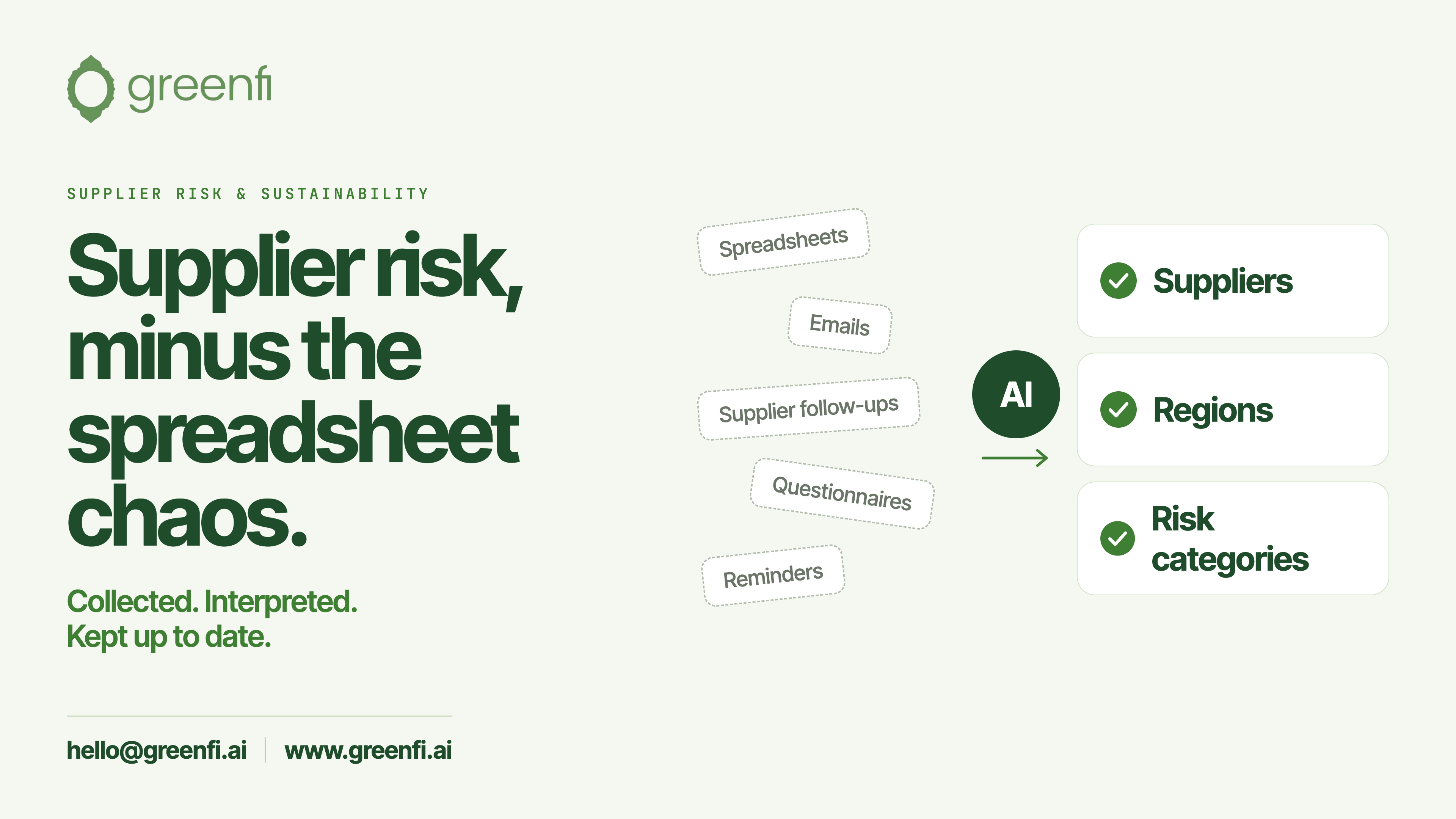
Supplier data does not always arrive in a standard format. AI can help extract, organise, and interpret relevant information from documents and other data sources, making it easier to analyse supplier performance consistently.
- Improving risk visibility
By bringing supplier information together, AI-powered platforms can help teams assess risks across suppliers, regions, and categories. This supports a clearer understanding of where potential vulnerabilities exist and where further investigation may be needed.
- Keeping supplier intelligence current
Supplier management should not end when an assessment is completed. AI-enabled monitoring and update workflows can help teams maintain more current supplier profiles as new information becomes available.
- Supporting better decision-making
When supplier information is structured and accessible, procurement, compliance, and sustainability teams can spend less time searching for data and more time prioritising risks, coordinating responses, and making informed decisions.
Introducing GreenFi: Smarter Supplier Risk and Sustainability Intelligence
GreenFi helps companies take control of supplier risk and sustainability data without drowning in spreadsheets, emails, or endless supplier follow-ups.
Using enterprise-grade AI, GreenFi automates how ESG and risk data is collected, interpreted, and maintained across the supply chain.
The platform helps organisations bring fragmented information into a more structured view of their supplier ecosystem, enabling teams to better understand supplier performance, regional exposure, and relevant risk categories.
With GreenFi, businesses can work towards:
- Greater supply chain visibility: Develop a clearer view of supplier-related ESG and risk information.
- Reduced manual effort: Streamline repetitive data collection and information-processing tasks.
- More informed risk assessments: Organise supplier intelligence to help teams identify potential concerns and prioritise follow-up.
- Better cross-functional collaboration: Give procurement, compliance, and sustainability teams a more consistent view of supplier information.
- More efficient sustainability management: Improve access to the data needed to support ESG assessments, monitoring, and reporting.
The goal is not to create another layer of reporting for suppliers or another system for internal teams to maintain. It is to make supplier intelligence more accessible, actionable, and manageable.
Better Supplier Intelligence Without More Reporting Pressure
An effective supplier risk management strategy should improve visibility without adding unnecessary administrative burdens.
Suppliers already respond to multiple questionnaires, audits, and information requests from different customers. Meanwhile, internal teams must reconcile responses, validate information, and prepare data for business and compliance decisions.
A smarter approach focuses on making better use of available information, reducing repetitive requests where possible, and structuring data so it can support multiple business needs.
AI can help enable this shift by reducing manual processing and helping teams work with supplier information more efficiently.
The result is a more practical approach to supply chain sustainability: one that supports stronger oversight while respecting the time and resources of both suppliers and internal teams.
From Data Collection to Proactive Risk Management
The future of supplier risk management lies in moving beyond static assessments and disconnected reporting processes.
Businesses need systems that help them connect information, understand emerging risks, and make better decisions across increasingly complex supply chains.
AI is an important part of this transition, but its value depends on how effectively it is integrated into existing workflows, data governance practices, and decision-making processes.
With GreenFi, organisations can take a step towards a more intelligent, connected approach to supplier risk and sustainability management, helping teams spend less time chasing information and more time acting on it.
Your supply chain deserves more than spreadsheets. It deserves intelligence.
Ready to make your supply chain smarter?
Take control of supplier risk and sustainability data with GreenFi’s AI-powered platform.
Contact GreenFi to explore how we can help your team simplify supplier data management, improve risk visibility, and streamline ESG workflows.
Get in touch: hello@greenfi.ai
Website: https://greenfi.ai